
 The seashore holds surprising culinary potential for the forager and the new book “The Edible Seashore” covers everything you need to know about harvesting the bounties of the shoreline! [Read more…] about New Seashore Foragers’ Handbook

Great Burnet
Whilst picking Brambles yesterday, I came across something I have not seen for many years….Wild Burnet.
I used to pick these en masse for my father to make wine and here it was growing in the grassland near the hedgerow.
 The Wild Burnet or Sanguisorba Officinalis grows to around 1m tall in grassland and on hedgerow banks.
It is generally not easy to see the foliage but the tall wiry stems raise themselves above the vegetation and waft their dark burgundy, (almost brown) rounded flower heads in the breeze.
The leaves can be used in salads and taste mildly of cucumber.
Ancient Chinese Medicine saw the root of this plant employed to treat bleeding, such as nosebleeds and dysentry. And when applied to the skin is used in the treatment of insect bites and burns.
Although the leaves were used in salads and sandwiches, it was only the bitter, peppery flower heads that we used to collect for the wine. This had the advantage of making the plant grow bushier and therefore more flowers were available the following year.
I will have to ask my dad to hunt out the wine recipe. The only thing I can remember about making it is fighting hundreds of wasps due to the copious amounts of honey in the mix. As my husband said, it is probably more of a mead than a wine but the net result was incredibly good.
Perhaps you have different uses for it, if so, please let us know.
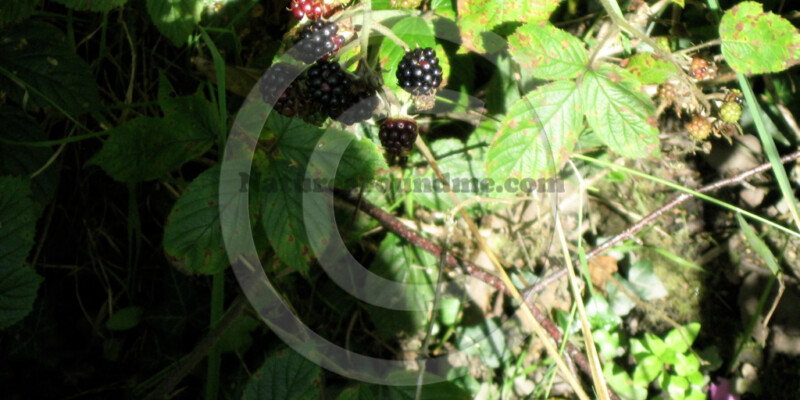
Blackberry Time

Autumn is approaching rapidly and the hedgerows are starting to yield their harvest.
A sunny day finally arrives, so with the dogs on their leads and pockets loaded with carrier bags, we set off to collect some Blackberries. or Brambles and Blackites as they are known locally.
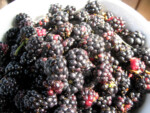
Compared to last year and especially the year before, the fruits were disappointing. Very small berries and many of them already going mouldy on the branches. Some fruits are hard and stunted, so it took us over an hour and a good mile covered to gain only about 2Kg of fruit.
In recent years, the same patch has yielded around 10Kg of nice plump juicy berries.
Pondering the reason for this we firstly blamed the weather. This year has seen only four weeks of decent sunshine in May, turning to rain in the second week of June. The ground was incredibly waterlogged and this is the first time we have been slipping around in mud whilst trying to pick the fruit.
The second factor we considered was the proliferation of Himalayan Balsam in the hedgerows. This plant is not native to the UK and has become a real pest in the past three or four years. Its growth is rampant and no doubt it is sucking vital nutrients away from the native Blackberry bushes.
All of the bushes seemed to be “struggling”, with leggy stems reaching for much needed sunlight and bearing rust patches on their leaves.
Anyway, we had enough for a couple of pies or crumbles and maybe even a couple of pots of bramble and apple jelly,
Blackberries should not really be eaten whilst picking as they can contain lots of little maggots and should be soaked in cold salted water for about four hours before use. This will allow all those little beasties to crawl out and drown, leaving you with a bowlful of clean blackberries ready to use. Tip the berries into a strainer and rinse well to remove any traces of salt.
Within hours of picking, the fruits can often start to rot, so they are best used straight after cleaning or frozen. (Always clean the fruit before freezing and remove as much of the water from the berries as you can).
If you are planning to go foraging for wild Blackberries, consider some sturdy shoes and old clothes as you will get prickled and the juice stains. A walking cane (the sort with a hooked end) is very useful for reaching and pulling branches closer. Plastic bags (without holes in) or containers to put your berries in.
If you take the dog(s) along too, be ware that most of the best ripe berries will be in full sun, so be mindful of the time you spend and keep taking your dog into the shade and carry a bottle of water.
Don’t pick berries near the ground (dog peeing height) or from the side of a busy road to avoid contamination from vehicle fumes.
let us have your “Brambling” tales and tell us if you are experiencing a poor blackberry harvest, even if you grow your own.



Wild Apples
July brings warm sunny days and balmy nights, ideal for going for a walk and having a look to see what is ripening in your local hedgerows.
Wild apple trees can often be found alongside park embankments and hedges. Quite simply the result of somebody’s discarded apple core whilst out walking or thrown from car windows on roadside verges. [Read more…] about Wild Apples

Roadside Honesty
When travelling country roads one often comes across signs attached to gateposts or propped against trees proclaiming “fresh fruit and veg” as well as many other delights such as free range eggs and honey.
One such occasion was yesterday, for once a dry and mild Saturday, enabling us to take our dogs Buster and Charlie for a good long run to stretch their rain weary legs.
A day out by the sea was required and on the way we chose to take the back roads which wind past many small farms and villages.
At this time of year the soft fruit is ripening and sure enough, on a fence was a sign saying “blackcurrants and raspberries”. Turning off the road onto a narrow farm lane overhung by what promised to be quite a crop of apples later in the year, we came to a small courtyard with a table bearing boxes brimming with ripe, juicy fruits.

At only £1.20 for 500g of currants and £0.75p for a box of raspberries, we helped ourselves to the pickings and left the money in the honesty box on the table. I think I got quite a bargain, as most of the large supermarkets charge around £1.00 to £1.79 for 250g of currants.

The next stop yielded some free range eggs, tomatoes, beetroot and some lovely home made lemon curd.
In fact all of the produce you see on the table below was purchased for just slightly under £10.00.

Some of the raspberries, we could not resist eating on the way home, but once home we promptly washed and froze the fruit for later use.
The Right to Roam

Picking wild berries and plants for food obviously dates back to the earliest days of man, but we have to remember that now most land is owned by somebody and we must respect this when foraging.
Various pieces of legislation exist and it pays to familiarise yourself with the basics. [Read more…] about The Right to Roam